Wednesday, January 13, 2016

Criterion B: Developing Ideas; Sport Technology

Criterion B: Developing Ideas

In this stage you will be expected to:
i.              develop design specifications, which clearly states the success criteria for the design 
of a solution. pages 1-2
-      The design specs should be measurable with a clear way on how the specs will 
be tested
Example: Game Product
Specification
Test
Game will be less than 1 MB in size
Install it in a computer  the size in properties
Played by two players (Multiplayer game)
Allow two players to play simultaneously
The game 3 levels that will advance in complexity.
Play the game at each level time the duration it takes to complete a level and record the complexities.

ii.            develop a range of feasible design ideas, which can be correctly interpreted by others
                pages 6-7
-      Develop a range of good quality designs and measure each of them against the 
design specs.
Your description for each design should be detailed and clear and use captions 
on images or diagrams which are not clear.

Examples of Game design Storyboards.


Animation
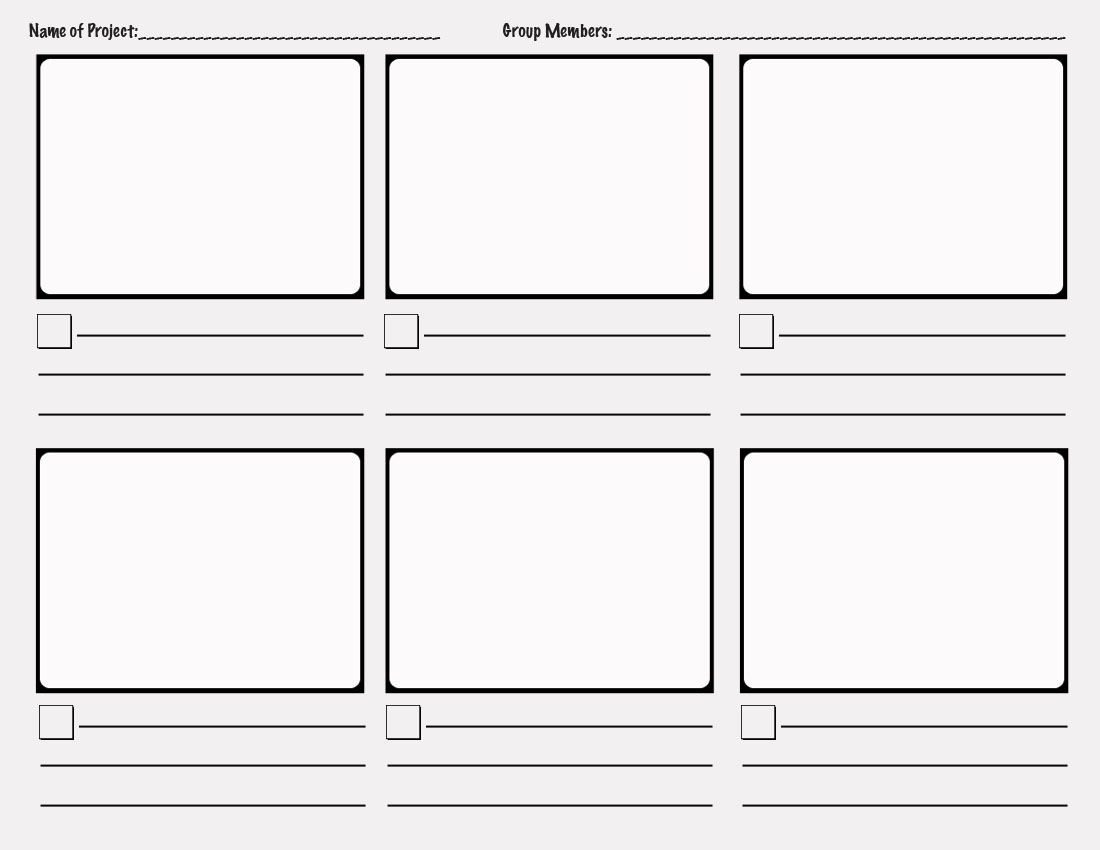

Website


Table of rating/ ranking: (client, expert and peer)- This will help you to determine which design to choose and which comments to be used for justifying and as an improvement.

Client:

Priority
Specification  ( rating 1-5), 1 lowest and 5 highest
Design 1
Design 2
Design 3
Comments
1.
The animation will have title- Marine
3
5
3

2.
Animation will have five characters
4
4
5

3.
Animations will have music- Sauti Sol ( Sura yako)
3
4
3


Total Scores for each design
10/15
13/15
11/15


- Summary of comments based on the final scores.

Expert

Priority
Specification  ( rating 1-5), 1 lowest and 5 highest
Design 1
Design 2
Design 3
Comments
1.
The animation will have title- Marine
3
5
5

2.
Animation will have five characters
4
4
5

3.
Animations will have music- Sauti Sol ( Sura yako)
3
4
3


Total Scores for each design
10/15
13/15
13/15


- Summary of comments based on the final scores.
peer:

Priority
Specification  ( rating 1-5), 1 lowest and 5 highest
Design 1
Design 2
Design 3
Comments
1.
The animation will have title- Marine
4
5
3

2.
Animation will have five characters
5
4
5

3.
Animations will have music- Sauti Sol ( Sura yako)
5
4
3


Total Scores for each design
14/15
13/15
11/15


N/B: The preferred choice of the client will always be respected and chosen.

iii.           present the chosen design and justify its selection pages 1-2
-      State the chosen design.
-      Provide detailed justification why the design was chosen. ( Positive comments for each design specs of the chosen design by the client)
-      Suggest possible improvements to the chosen design. ( Negative / concerns received from the chosen design)
-      show the chosen design with the improvements included as a final design.


iv.           develop accurate and detailed planning drawings/diagrams and outline the requirements
 for the creation of the chosen solution. pages 3-4
-      Normally using a Plan table showing the sequential steps in creation of the product is
 important.
Example: Game Solution
Steps
Activity/ Techniques
Duration
Resources required
Where
1
Start by working on the flash start-up log in screen with instructions options similar to the screen shown.

1 hour
Flash software;
Font software to edit the font.
Animation software to insert  the back images


At home


  • develop a series of accurate drawings/diagrams that include sufficient details of the design for peers/others to interpret correctly to make the solution


  • include details of size, assembly and production methods in their drawings/diagrams

 Why do I need a planning drawing/diagram?


 Typically, designers will develop their ideas and create detailed drawings/diagrams for a manufacturer to  create a final prototype/sample/model. 

To get the correct solution created to the correct specification, designers must communicate their final chosen solution to a manufacturer very clearly. Planning diagrams and drawings are communication tools that are essential for good design.

When designing solutions to problems, you need to ensure that you have a very clear idea of what you will create. 

There is often a great difference between the “idea” and the “realized solution”. To ensure that the idea and realized solution are the same, you should consider all aspects of creating the product. Through the development of design ideas, you should have identified:

  • which materials will be required (digital or tangible, standard or customized components, and so on)
  • which tools and processes will be used (hardware, software, techniques and so on)
  • the size, tolerances, position (layout) and assembly of components
  • the overall visual appearance.

These elements must be defined clearly through planning drawings or diagrams that are sufficient for someone else to follow.

In Digital design, three key items are usable;


A. Table of requirements based on design specs/ .


Step
Task
Requirement/ Description
Resources/materials
1.
Signup to Wix   


  •        -  Signup an account on www.wix.com
  •        - Remember user name and password.
  •        - Choose the domain name: www.victorwamurwa.wix.com
  •      - Type the Title of the website; 
My Culture My Choice.
-internet
- Wix web builder
- computer
2.
Login to Wix          account


  • -          Use the username and password to login.
  • -          Scroll through the templates and layouts.
  • -          Select a layout with Blue and Yellow colors
- internet
- Wix web builder
- computer


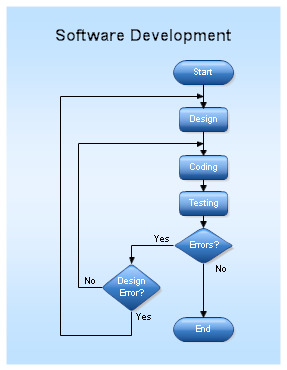
B. Flowchart Symbols

checkout the following link for more on flow chart. http://www.smartdraw.com/flowchart/.of interest when interacting with the site above is the a) flowchart examples and b) flowchart symbols.

Take a case example of someone developing a database to:

i) capture records of books in the library

ii) register library users

iii) handle borrowing and returning of books


.


                                      Sample flowcharts.

1. website        flowchart


                            Animation / Video


Games


Apps/ CookBook


Magazine


C. Sitemap/ Layout                                                              

Sitemaps on the other hand explain the layout of your project. It would explain the various tables and the interconnection among the tables in the case of a database. 


It explains the various pages and how they are linked in the case of a website, and so is the case for any other application.


Take a case example of the following website:
http://www.beachcampwatamu.com/


1. Magazines


2. Website


3. Apps


4. Games


5. Magazines


6. Video/ Animation


Wednesday, December 9, 2015

Sport Tech Strands

Sport Technology Unit Criterion A: Inquiring and Analysing Summative

Challenge

Many sports have problems that can be solved easily by introducing new or existing information
 technology solutions. The digital solutions can transform a sport in terms of publicity, accessibility, 
tutorials,  or enhance the organization's and the documentation of the sports operations.
Your task is to identify a sport related challenge that can be addressed or solved using an IT based 

solution or introduce a new sport in the community. The problem should be clearly described and the 
client's current way of addressing the situation described. The problem description should include the
 current limitations the client is facing and detailed explanation of why you think an IT solution will be the best. 

Criterion A: Inquiring and analysing
Maximum: 8
Students identify the need for a solution to a problem. At the end of year 4, students should be able to:
      i.        explain and justify the need for a solution to a problem for a specified client/target
 audience : 1 pagediscuss the sport's problems and how long it has persisted,  show how it has affected the client 
and community, show how the client is in dire need for solution, .
     ii.        identify and prioritize primary and secondary research needed to develop a solution to the problem: 
2 pages. A table of research plan indicating questions relevant from primary and secondary sources. 
A summary of the feedback from research.
              Task                   
           Priority
           Why is it        important
             Sources
            Completion date


   iii.        analyse a range of existing products that inspire a solution to the problem:
4 pages: analyze 5 applications relevant to the IT tools you chose by using a table. 
Application
Advantages
Limitation


analyze 5 existing  products created to solve similar problems in sports. (paragraph)
    iv.        develop a detailed design brief, which summarizes the analysis of relevant research. 
2 pages.
- write a detailed design brief that outlines, the client/target audience opinion, the experts opinion, and your 
personal opinion. discuss the IT tool you will use, discuss the key features of the tool, specifications  and 
its benefits to the client based on your research.
Capture; key concept- Systems, related concept- Ergonomics/Innovation and global context-Scientific and Technical Innovation


1. In-Text Citation.

In - Text Citation allows the reader to know what ideas, opinion and facts are the author's and what came from the source. The citation also refers the reader/ examiner to the reference page at the end for full citation.


In APA style, in-text citation are composed of author's last name, date/year of publication and the page number. (Truner, 2003,p.34).If you include a page range, use two ps followed by a period (Wafula, 2015, pp.34-35). The sentence period comes at the end of closing parenthesis.


 Additional information
 1. one author stated "..................",(Tally, 2003, p.6).
2. Two authors said, "...................",(Tally,& Deifan,2003, p.7).
3. Three to five authors ".............", (Tally, Daifan,&Mohamed, 2003, pp. 45-46).
4. Six or more authors, ".............",(Tally et al,2003, p. 17).
5. Unknown author use short title (" hip hop art", 2006, p. 7).
6. No date no page  (" hip hop art", n.d, para.1).


 Read more on this link In-Text citation

2. Appendix/appendices.
An appendix (one item) OR appendices (more than one item) is information that is NOT ESSENTIAL to explain your findings in the essay or report that you have written. However, this information may support your analysis and justification of your conclusions. For example the interview questions and answers.

 Therefore, you will need to know that: 
● Appendices are used when the incorporation of material in the body of the work would make it poorly structured or too long and detailed.
( Interviews, questionnaires, surveys and their answers can be placed in appendix)

● Appendices may be used for helpful, supporting or essential material that would otherwise clutter, break up or be distracting to the text. ( images, photocopies, drawings, sketches,...)

● Other people’s work in the appendix will be referred to (e.g. see Appendix 3), not quoted (e.g. using short or long quotes) from the appendix.

 ● Appendices must be referred to in the body of the text, for example, ‘details of the questionnaire are given in Appendix B (on page 23)’

Examples of students’ understandings about using appendices Student 1 (reflective writing) 
This example is about a two-page questionnaire that I designed and placed in the appendices. My understanding is that an appendix can be information that you used to inform your writing that you don't want to put directly into the essay; however, you MUST refer to this appendix in the body of the essay Therefore, in my Education essay, I included an appendix that was the actual questionnaire that I gave to my students when I was on teaching practice. In my essay, I wrote for the marker to ‘see Appendix 1’ when I had mentioned the results of the questionnaire I was required to write and use with my class.

 Student 2 (reflective writing)
 In my nursing assignment, my appendices were used to supplement the information in my essay. Firstly, we had to demonstrate our knowledge of the human skeletal system. The photocopied diagrams covered a number of pages, so Appendix 1 was a set of photocopied, labelled diagrams of the skeletal system discussed and referred to in the essay. Because the photocopied diagrams were copied from a book, I placed an in-text reference to this source in my writing. Secondly, we had to summarize the results of interviews with five patients at the local hospital about their recovery from bone breakages in car accidents, so Appendix 2 was a transcript of these interviews. Using appendices like this meant that I could show my lecturer that I had completed the set task and collected the data for the issues that were discussed in the essay

More information on appendix click on this link  How to use Appendix
Great resources to help you are Bibme http://www.bibme.org/ or Easybib http://www.easybib.com/ Remember to select APA style.

Tuesday, December 1, 2015

Unit 2 : SYNOPSIS


The challenge is to come up with a unit 2 synopsis of the following items:

  1. Specify the problem area you want to focus on; Management, new sport, data management, alerts, awareness
  2. Specify the client, clients,or audience.( club, team, school, 
  3. Identify the probable IT solution or solutions that will be ideal based on the problem and clients needs. ( gaming, mobile apps, interactive magazines,  interactive websites- coding, tutorial/educative video, data base, e.t.c
  4. categorically analyze how such a tool will stretch your skills and knowledge to full potential. Give a justification.


N/B: Send your unit synopsis to my email by end of the lesson. 

victor.wamurwa@agakhanacademies.org


Criterion A: Inquiring and analysing
Maximum: 8
Students identify the need for a solution to a problem. At the end of year 4, students should be able to:
      i.        explain and justify the need for a solution to a problem for a specified client/target audience
     ii.        identify and prioritize primary and secondary research needed to develop a solution to the problem
   iii.        analyse a range of existing products that inspire a solution to the problem
    iv.        develop a detailed design brief, which summarizes the analysis of relevant research.